Van Gogh's Spring Garden: what restoration reveals
What happens when you look at a Van Gogh through the lens of restoration? Restoring Spring Garden (1884) revealed surprising new discoveries. The Groninger Museum asked Tapart to translate that process into an in-gallery touchscreen interactive — so visitors can explore the differences for themselves.
What we provided
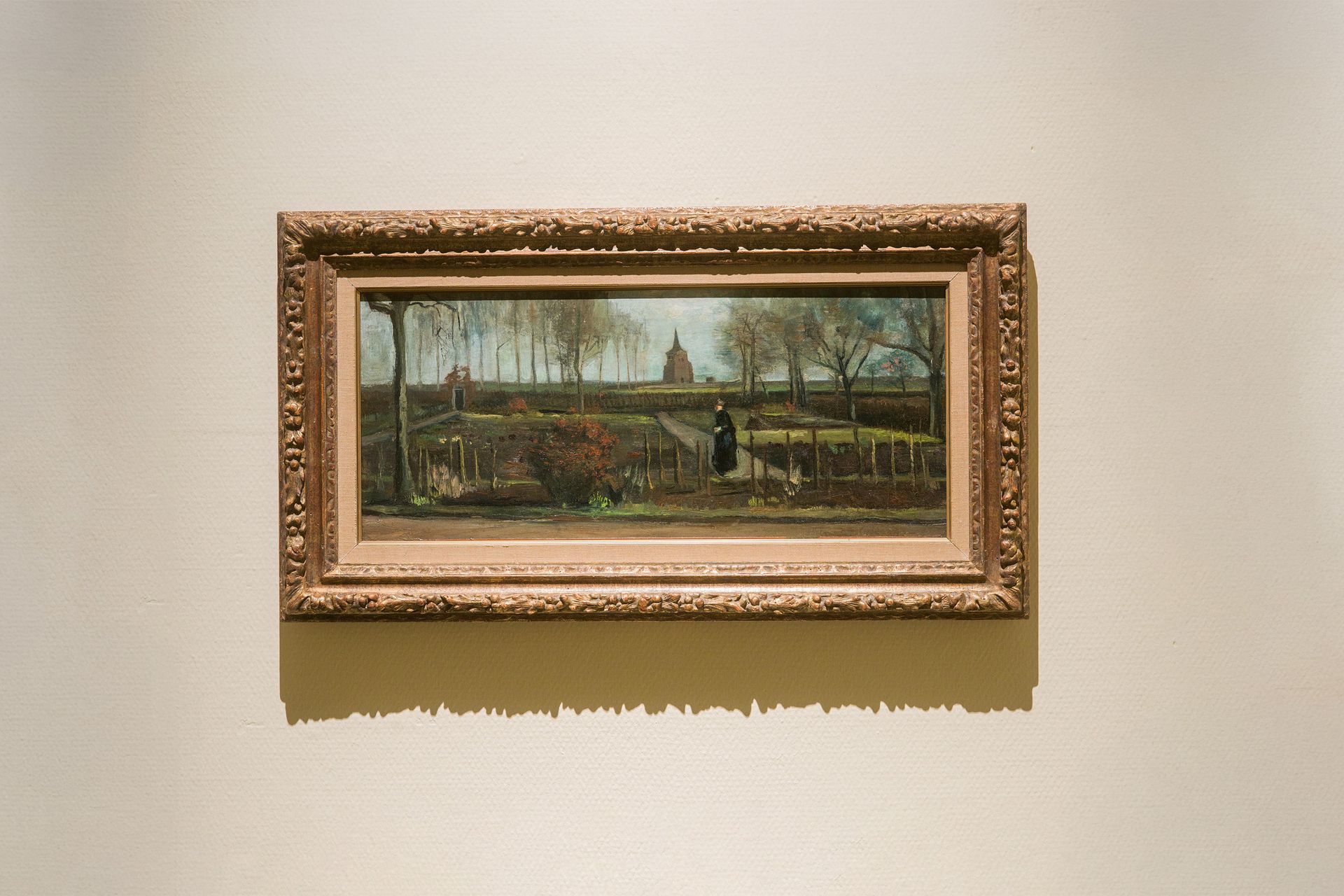
A remarkable recent history
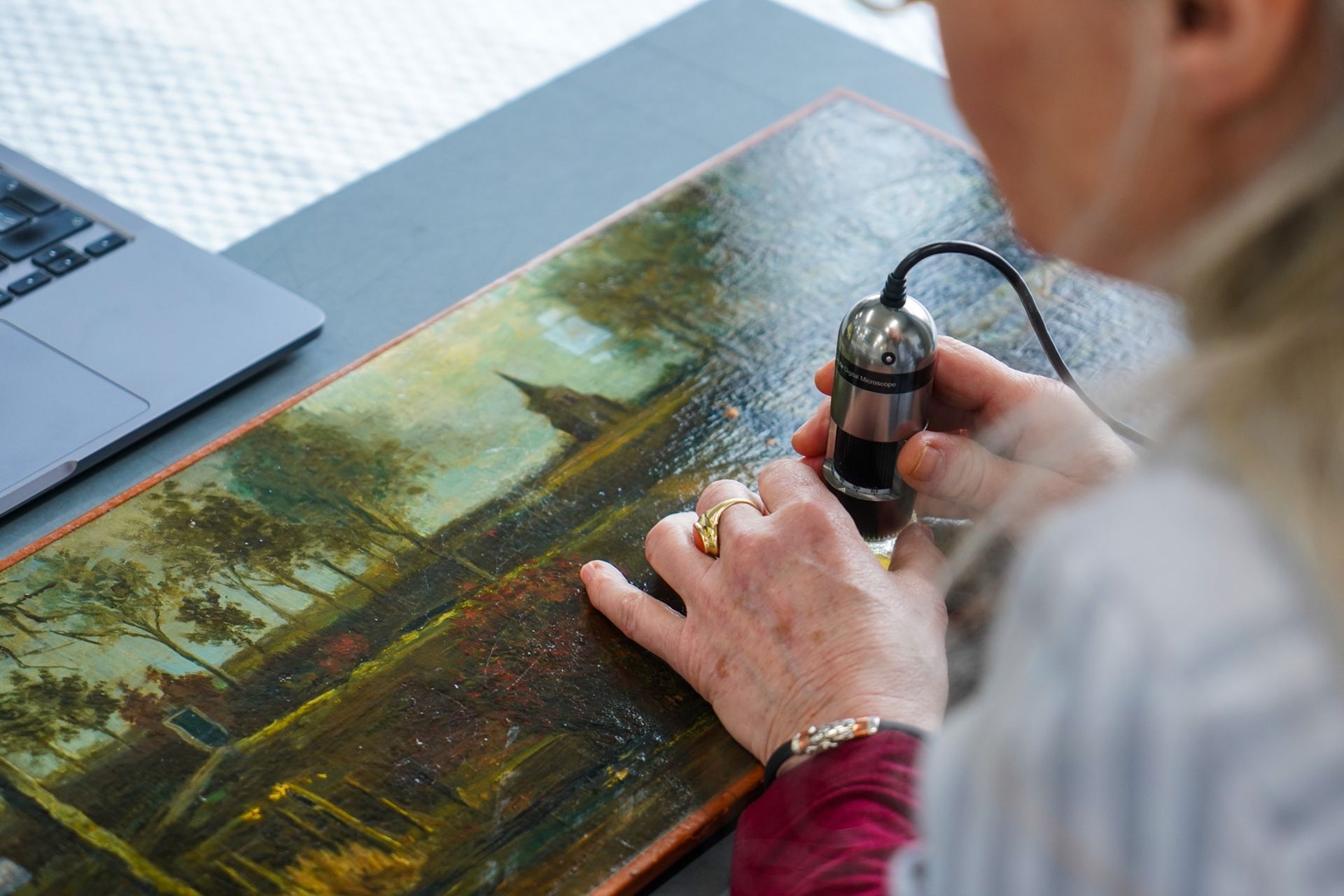
Spring Garden, The Parsonage Garden at Nuenen in Spring (1884) is the only Van Gogh painting in the Groninger Museum's collection, and it has had a remarkable journey. Stolen from Museum Singer Laren in 2020 and recovered in 2023 with the help of art detective Arthur Brand, it was returned damaged. Conservator Marjan de Visser spent three months restoring it, bringing it back to its original state.
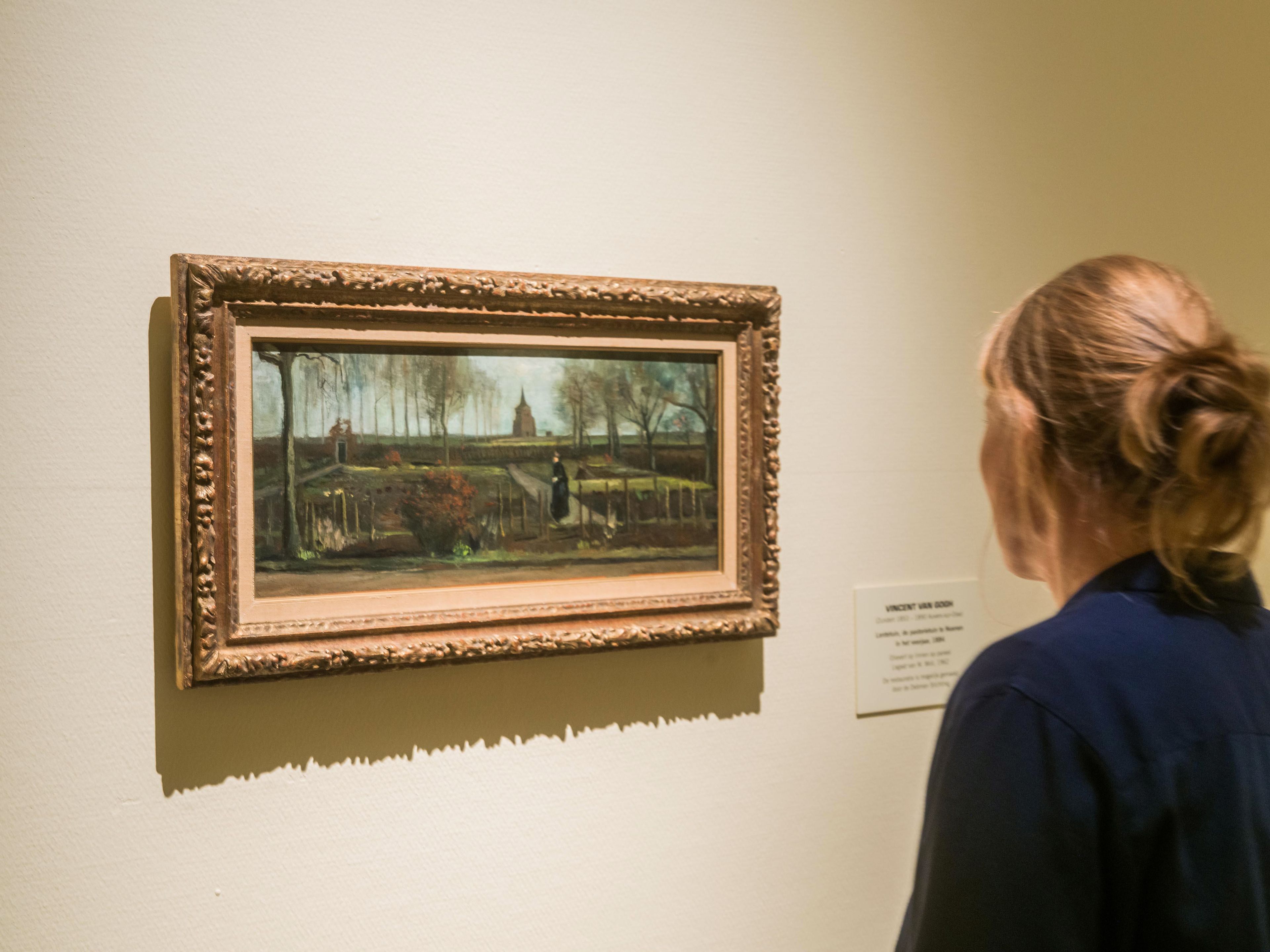
What the painting doesn't show
The remarkable story of the restoration process, the discoveries made along the way, and the sense of wonder when seeing the before-and-after differences — all of this remains invisible when you only see the restored work itself. With an interactive accompanying the painting's return to the gallery, we make this context tangible.
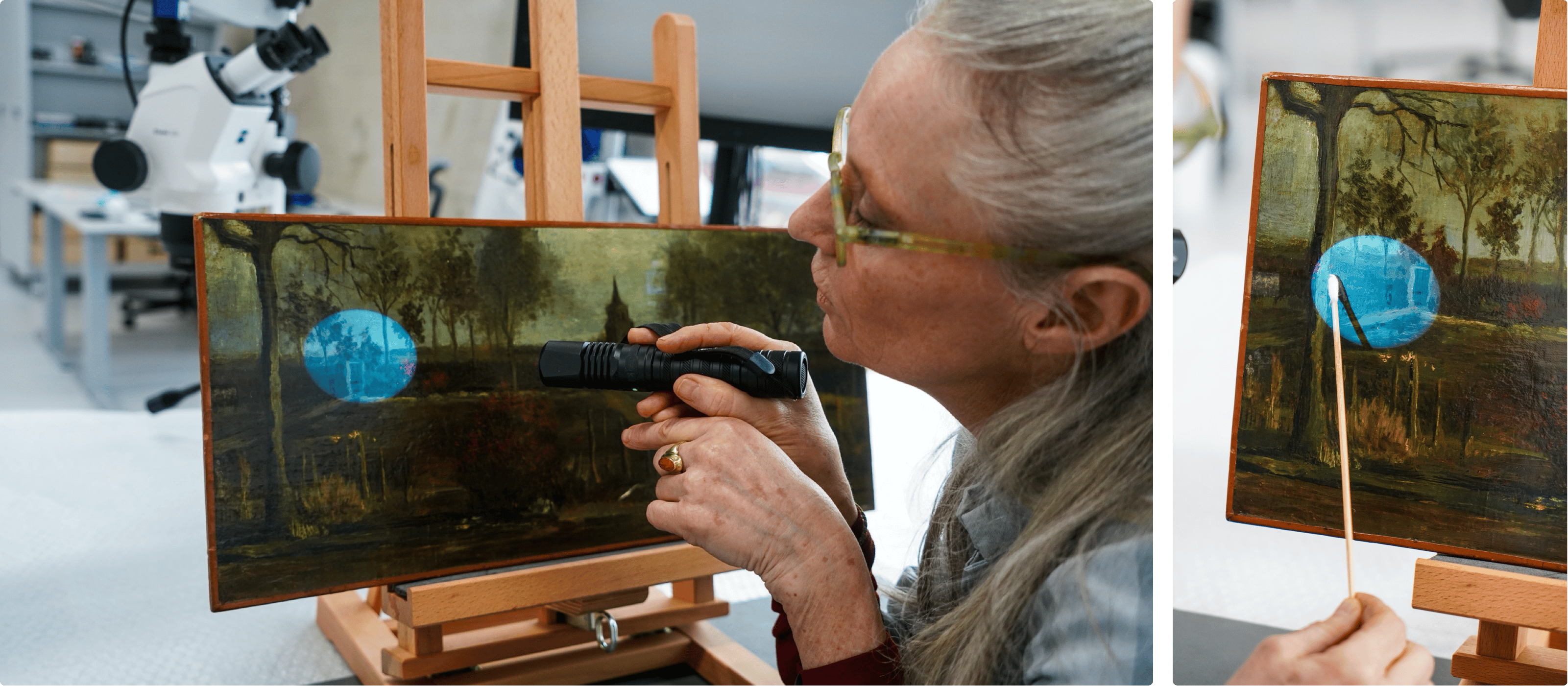
Restoring Spring Garden
Conservator Marjan de Visser examined the painting under UV light to reveal later paint layers invisible to the naked eye — then carefully removed them, layer by layer, to uncover Van Gogh's original paint beneath.
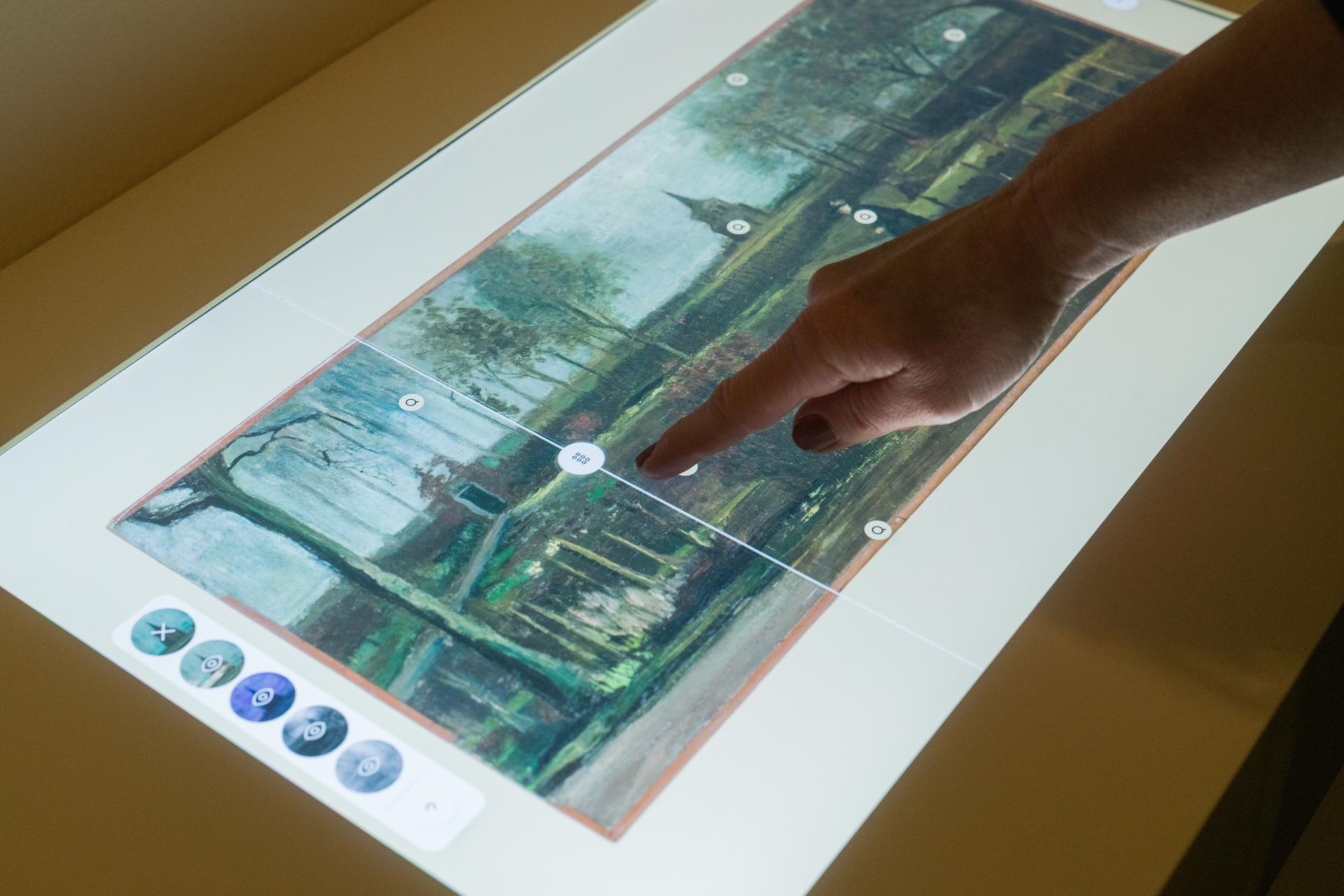
An in-gallery interactive
A touchscreen experience beside the painting brings the restoration story to life. Calm in tone, designed to complement the gallery space rather than compete with the work.
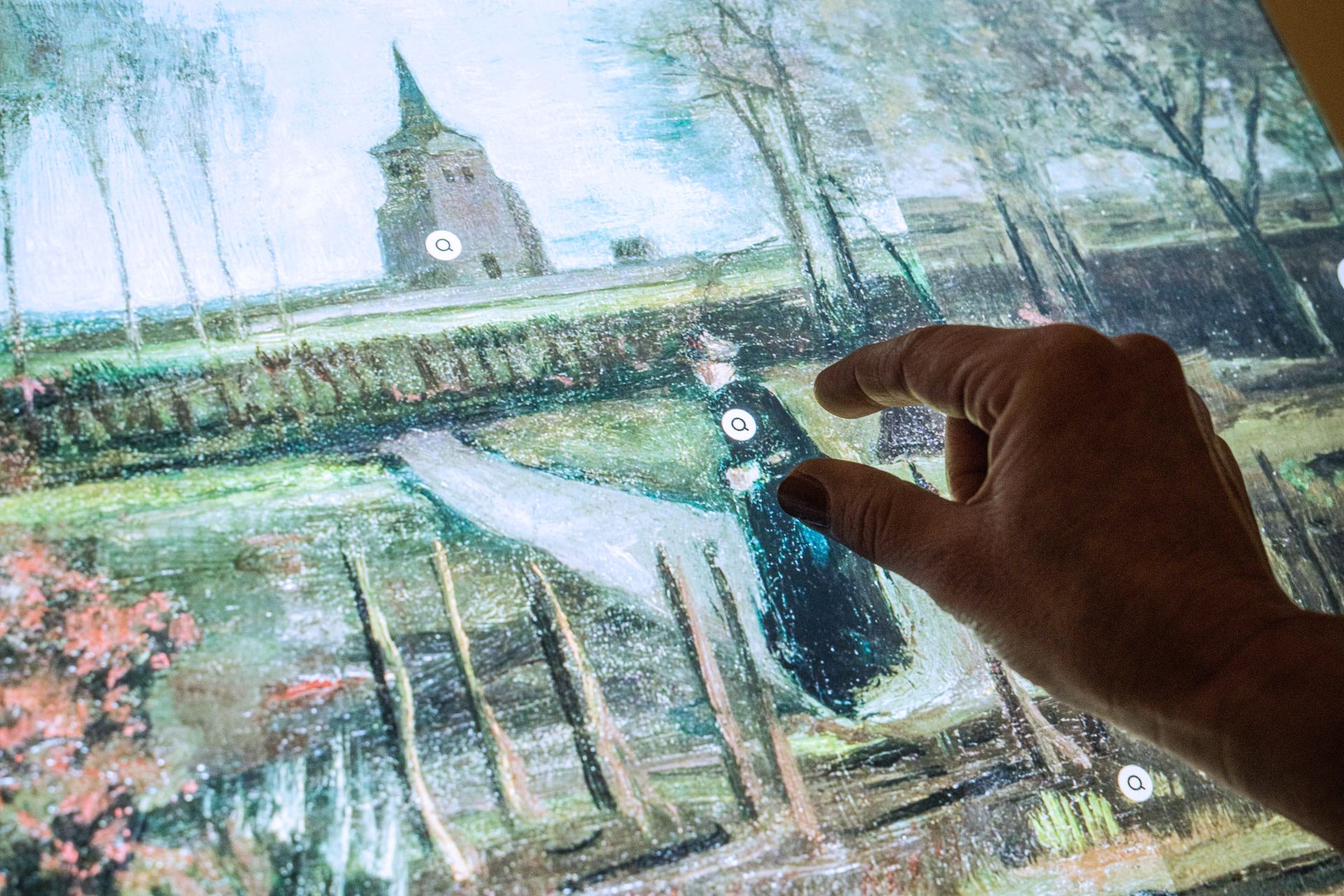
Two ways of exploring
Visitors can explore freely by comparing layers themselves, or follow a guided story via highlighted details.
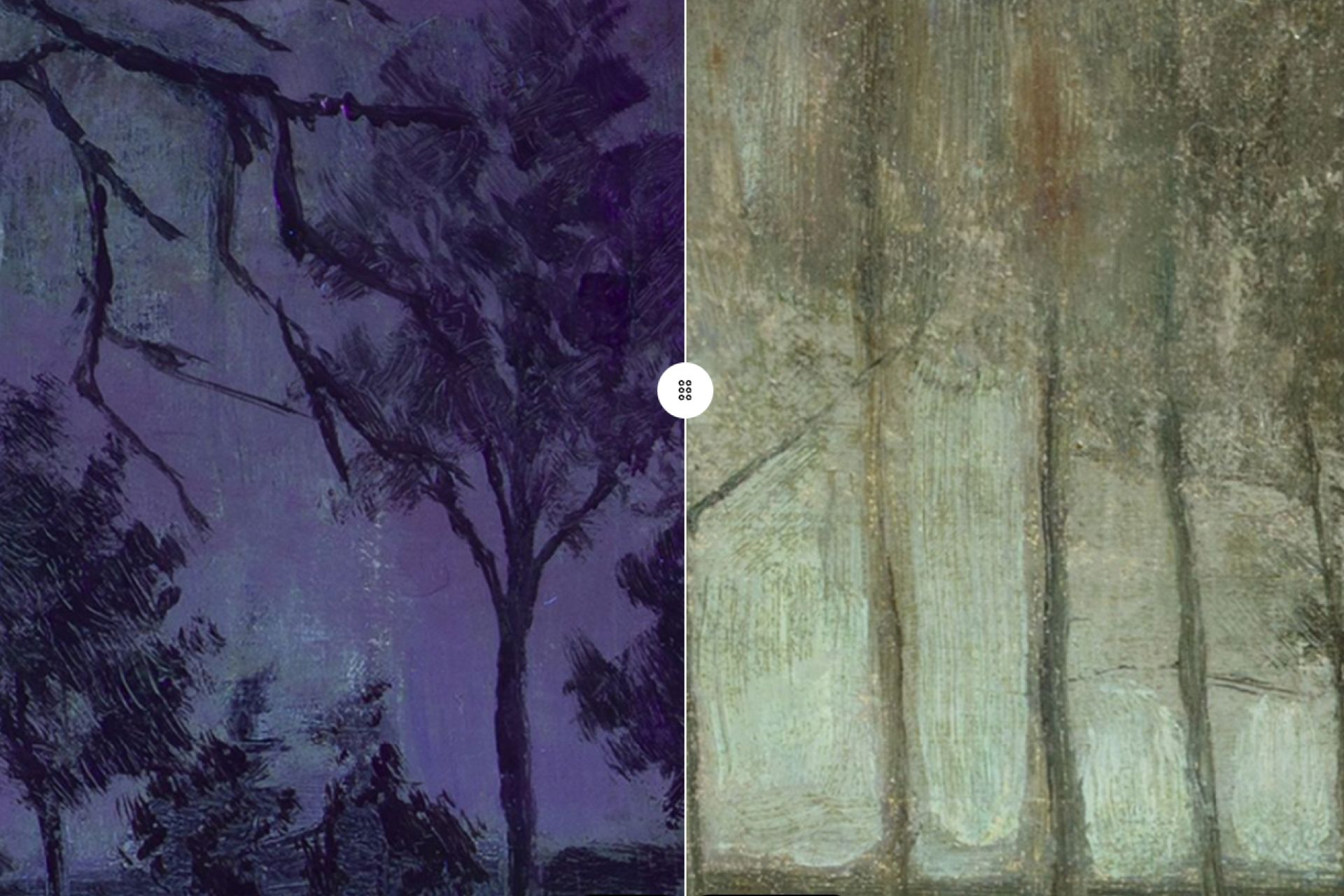
Restoration and research layers
Using a slider, visitors compare the work before the theft with the restored painting. They can switch between stages, zoom in, and inspect layers to see what earlier interventions added, where damage was found, and what of Van Gogh's original paint became visible again after restoration. Visitors can also overlay research imagery such as X-ray and UV photographs to understand how the restorer identified later paint layers.
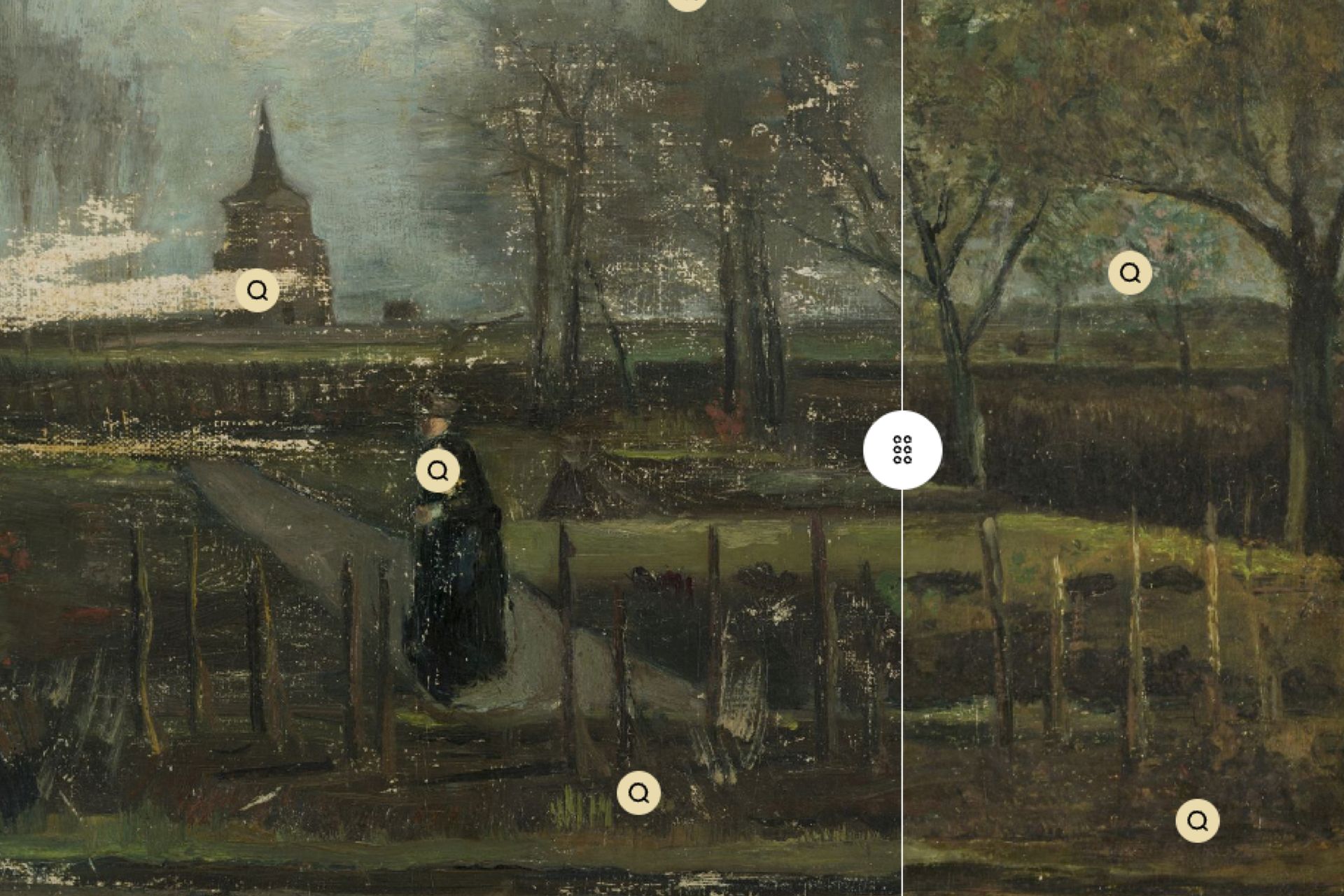
Hotspots
Hotspots draw attention to details that reveal something about the restoration, each with a focused story about the findings and the painting's context.
Beyond the surface
Visitors can now look past the restored surface — understanding what was found, what was repaired, and what Van Gogh's original paint looks like underneath. The interactive deepens the connection with the work and gives the restoration story the place it deserves.
In a short period of time, we realized a very strong digital product together with Tapart. Within 2.5 weeks, we went from idea to concept and realization, resulting in a visual and accessible digital installation in the gallery for our restored Spring Garden by Van Gogh. Tapart has not only proven itself to be a team that can move very quickly without losing quality, but also a very pleasant sparring partner regarding both content and form.
Colophon
Project
Groninger Museum
Concept / Design
Groninger Museum
Tapart
Development / Production
Tapart
Restoration
Restauratieatelier Marjan de Visser
Furniture
OpMaat 3D